APPLICATIONS
Street lighting for roads, cities, coasts and industry
For municipalities and contractors planning LED street or road lighting, VALDUR is specified for the site's actual exposure and selected configuration. On municipal streets, roads, paths, industrial sites, harbours and coastal infrastructure, the housing, sealing system and electronics need to work together over time.
Whether the project is in Scandinavia, wider Europe, Africa or another market, suitability is assessed against actual temperature, UV exposure, moisture, salt, pollutants and the selected configuration. Specified operating range: −40 to +40 °C.

Illustrates general corrosion issues with outdoor luminaires in humid environments. The luminaires date from 2012. The photograph was taken in 2025.
When the housing fails, everything else becomes secondary.
Many luminaires are replaced not because the LED technology is exhausted, but because the housing, coating, gaskets, fixings, and materials have been degraded by moisture, salt, UV radiation, and temperature cycling. Once corrosion, cracking, or ingress takes hold, the risk of secondary failures in electronics and optics increases rapidly.
-
—
Corrosion and coating failure drive maintenance costs over time
-
—
Moisture ingress can shorten the service life of electronics
-
—
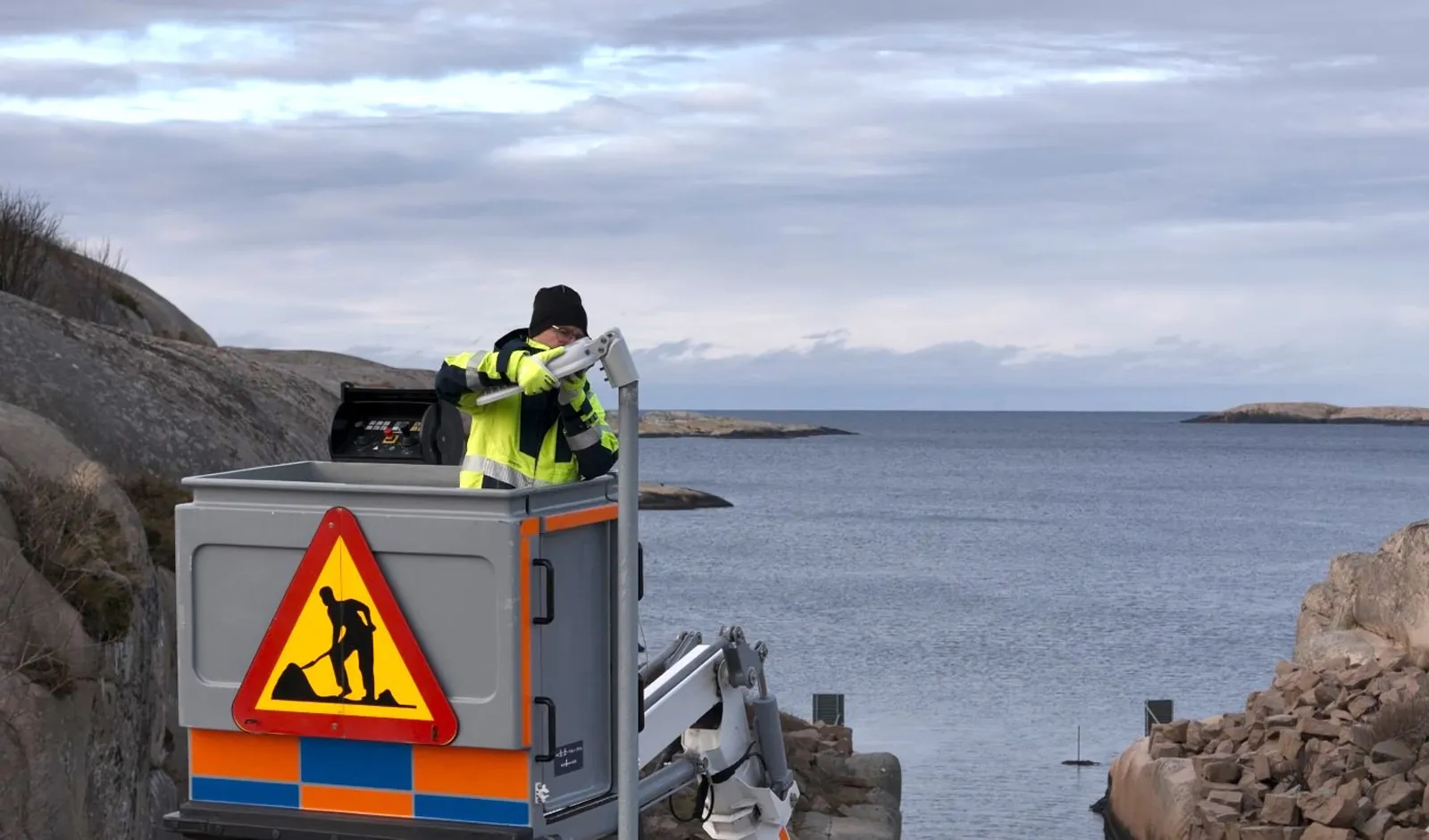
Replacement typically requires a platform vehicle, traffic management, and labour time
SMC is a well-established material choice.
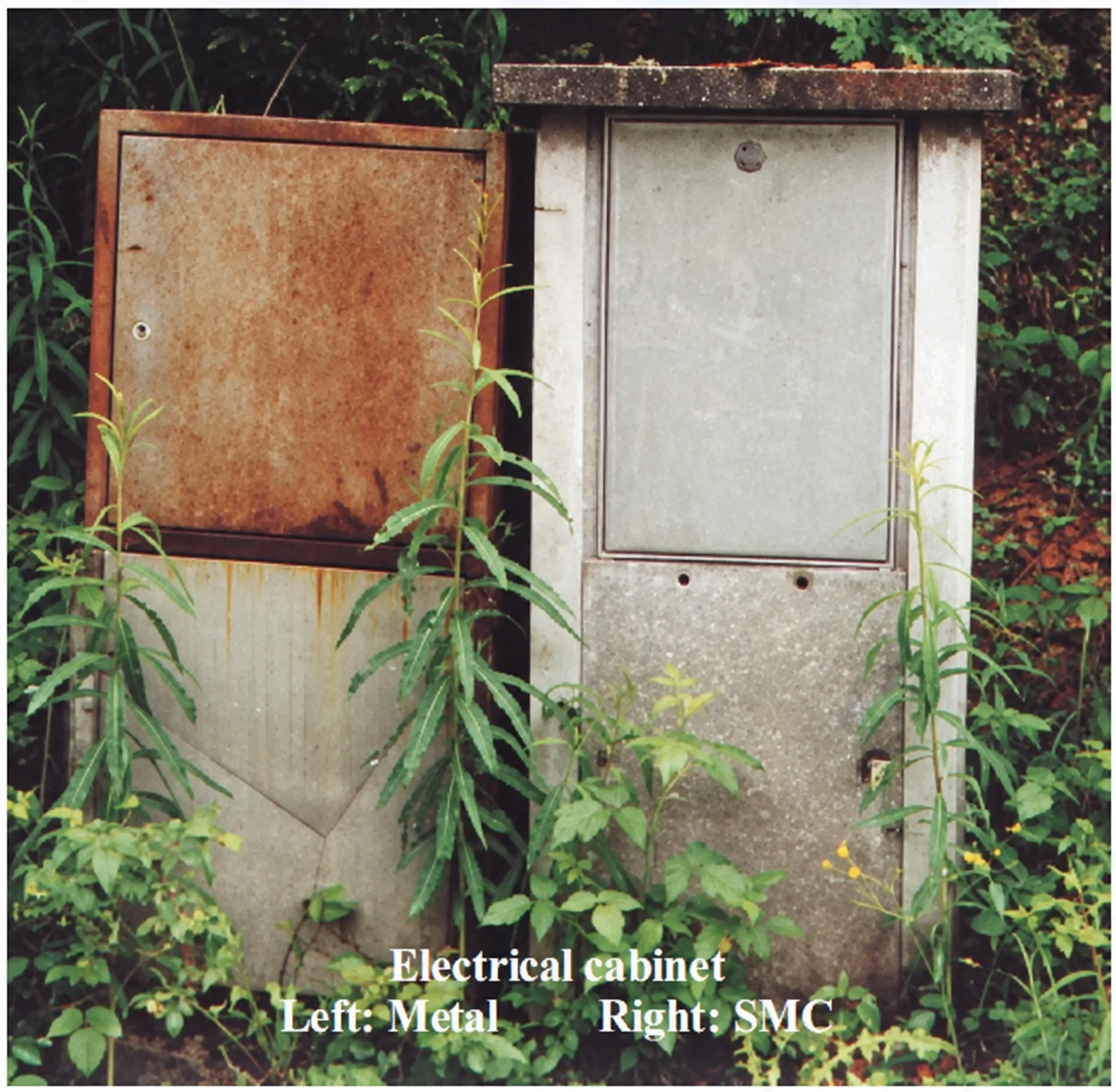
Same age. 21 years outdoors. Different material outcomes.
SMC composite has long been used in demanding electrical and industrial environments. The image shows an SMC enclosure and a same-age metal enclosure photographed 21 years after installation. When the material does not require paint or metallic corrosion protection, there is less to degrade.
-
—
Pigmented throughout — no paint or surface coating required
-
—
Corrosion-free housing — no surface rust or galvanic corrosion
-
—
Electrically insulating and durable in humid environments
21
Years
SMC composite and metal enclosures after 21 years outdoors. AI-enhanced reproduction of the original photograph.
From city street to coast — one fundamental requirement: the luminaire must last.
MUNICIPAL ROAD LIGHTING
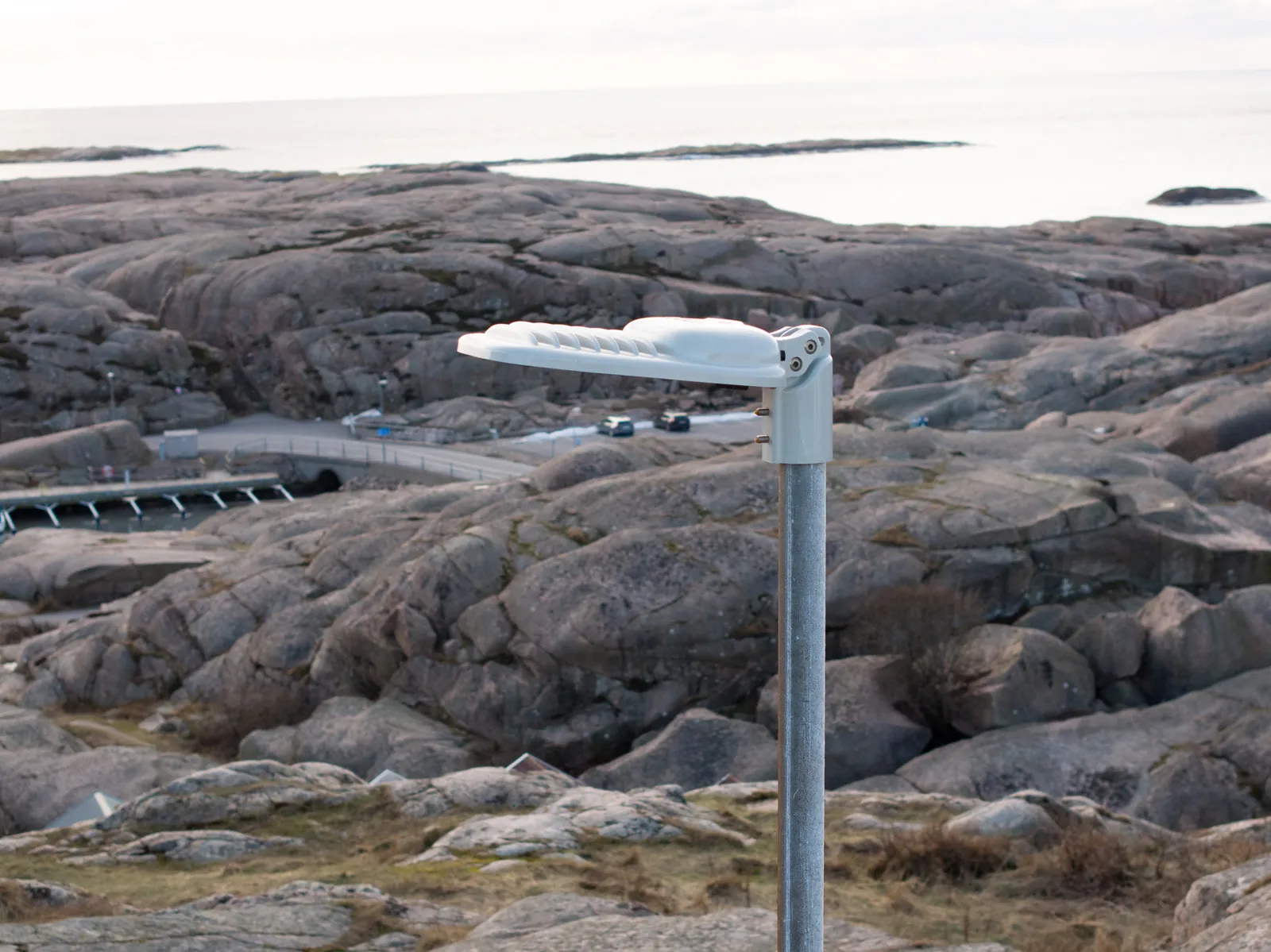
LED street lighting for municipal roads and streets.
Municipal lighting decisions should include purchase, installation, energy, maintenance, replacement and outage costs. Their relative importance depends on the project’s operating profile, energy price and service requirements.
Projected LED-module lumen maintenance is L90/B10 at >100,000 hours. The SMC housing needs no protective coating against metallic corrosion. VALDUR is designed for long-term municipal commitments. LP S1 with 1–10 V is standard; DALI-2 is available with a selected FP, SR or CR driver, and the specified SR/CR drivers are D4i-certified. A Zhaga Book 18 socket is optional.
HARBOURS & QUAYSIDES
Salt loading, mechanical impact, and operational reliability.
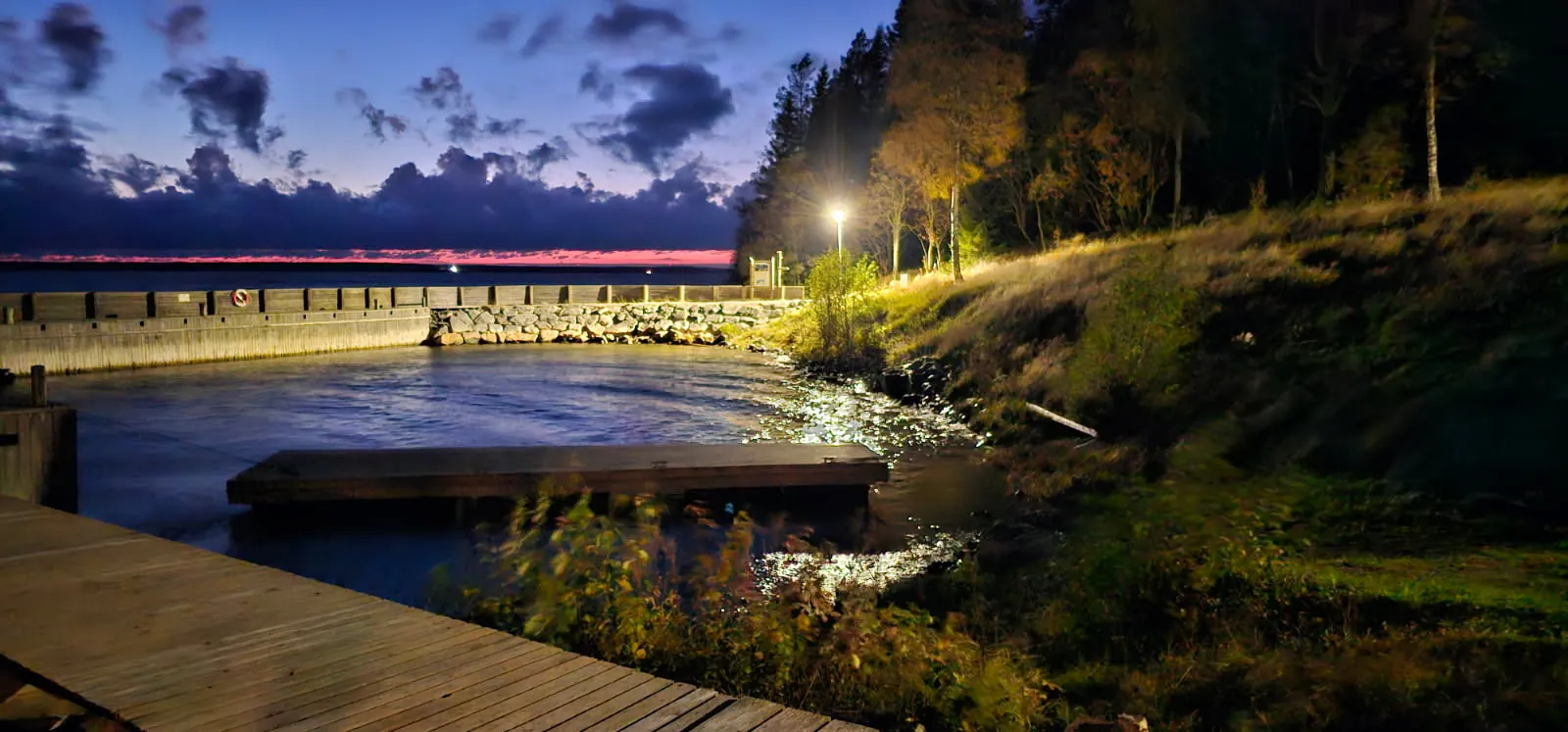
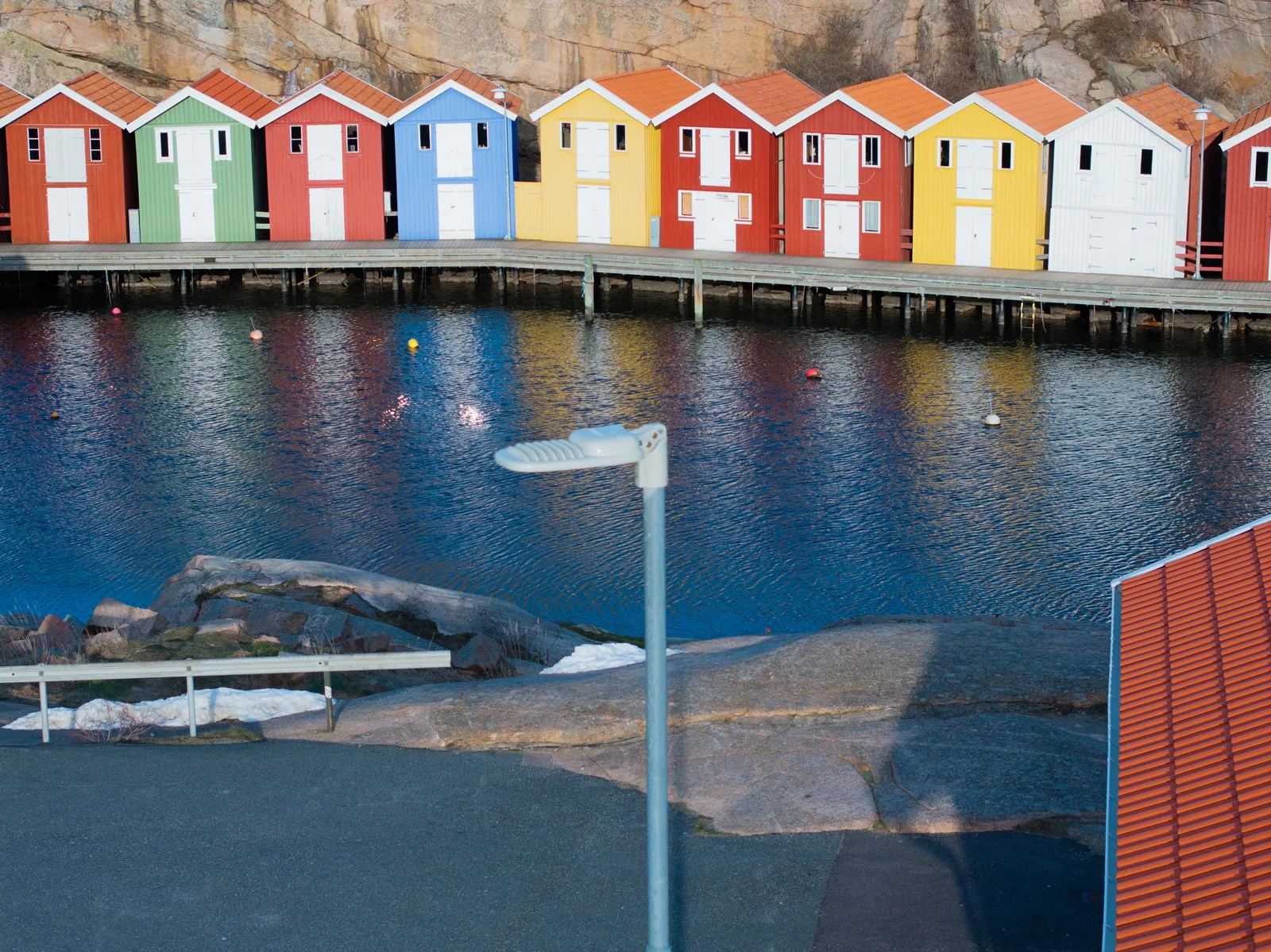
Working harbours combine sustained high salt loading with mechanical exposure from traffic, cargo, and handling operations. Luminaires installed here must exceed standard requirements. Marine atmosphere with mechanical exposure demands both chemical resistance and structural toughness.
VALDUR is developed for use in coastal environments, and the suitability of the complete luminaire must be assessed against the actual exposure and selected configuration. The stated IK08 rating applies to the tested complete-luminaire configuration. Galvanic corrosion cannot occur in the non-metallic SMC housing itself; metallic fasteners, interfaces and other parts must be assessed separately.
ROADS & THOROUGHFARES
De-icing salt attacks like sea salt.
On inland roads, de-icing and road salt attack metal housings the same way sea salt does on the coast — together with moisture, UV radiation and thermal movement that break down paint and protective coatings.
The non-metallic VALDUR SMC housing does not undergo metallic or galvanic corrosion and needs no protective coating against such corrosion. Salt, moisture, UV radiation and thermal cycling can still affect the material’s surface and properties over time.
PEDESTRIAN & CYCLE PATHS
Lighting for walking and cycling routes.
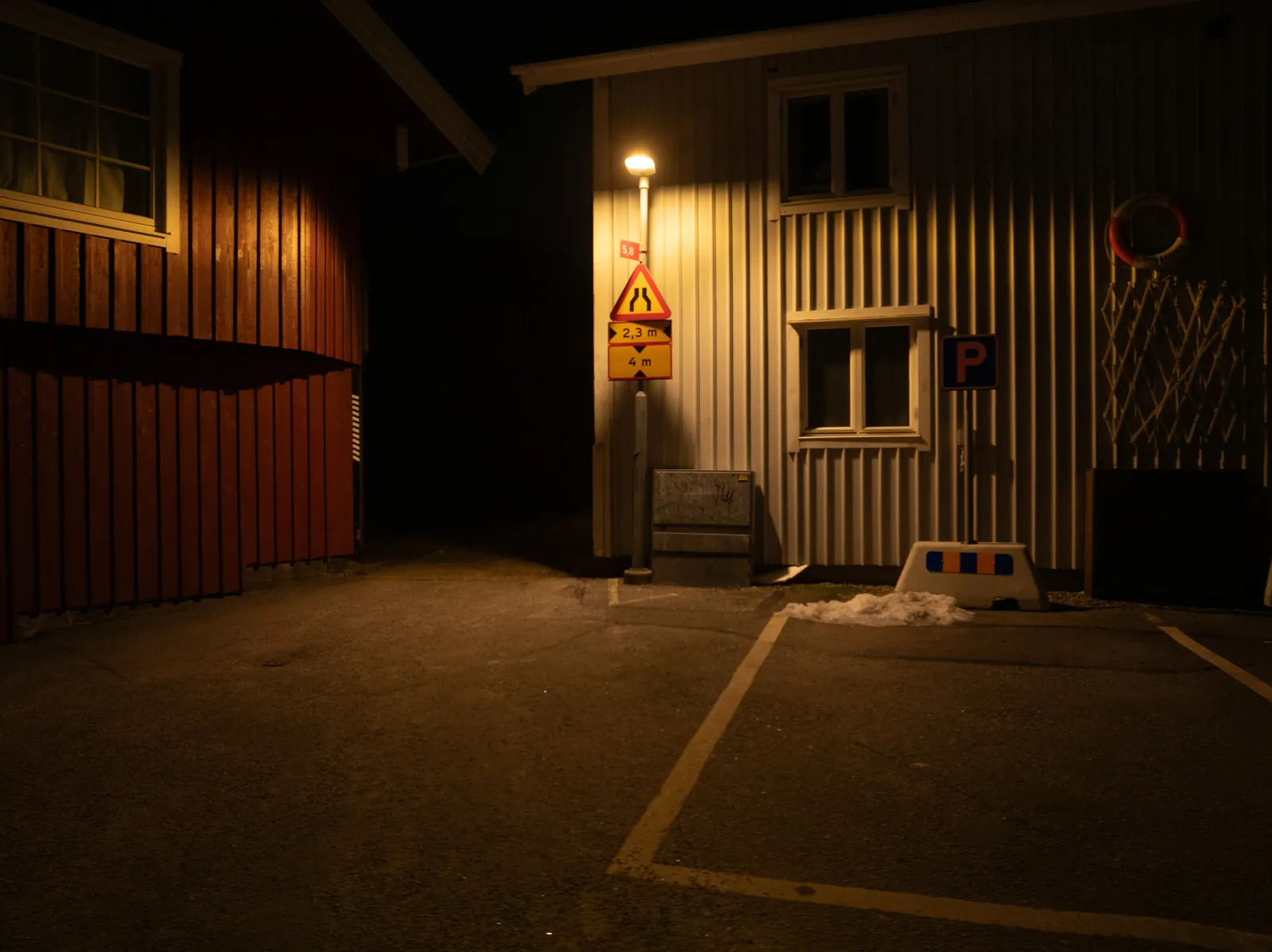
Shared-use paths, parks and greenways need uniform light distribution and glare control, often at lower mounting heights. VALDUR Type II optics (STRADA-2X2) can direct light along the path. Distribution, glare and uniformity must be checked in the lighting calculation.
Weighing 3.5–5.1 kg, VALDUR simplifies installation on slender columns and wall brackets, reducing both installation time and structural loading.
INDUSTRIAL FACILITIES
High output, robust housing, long operating hours.
Industrial sites and logistics zones can require high illuminance levels, extended operating hours and resistance to dust, mechanical loading and, in some facilities, chemical exposure. Materials, seals, fasteners and other components must be assessed for the specified environment.
VALDUR 100 delivers up to 10,150 lm at high efficacy. IP66 describes ingress protection and IK08 impact resistance under their respective test conditions. The SMC housing provides good resistance to many types of salts, solvents and other chemicals. Exact suitability depends on the substance, concentration, temperature and exposure duration and must be verified for the specific environment.
NATURE RESERVES
Lighting that respects darkness.
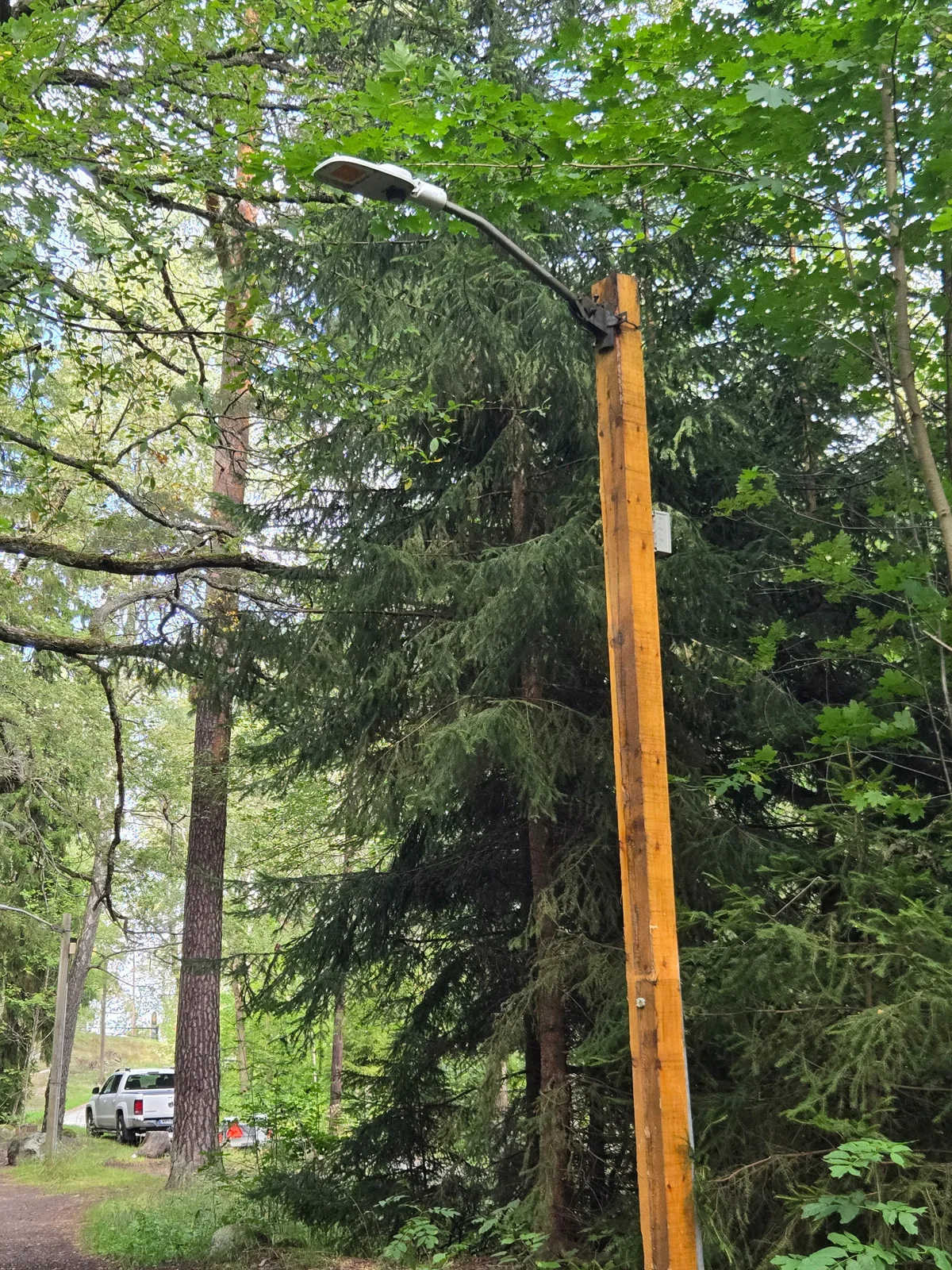
In nature reserves and other ecologically sensitive environments, artificial light should be assessed in relation to the species concerned, spectrum, illuminance, direction, operating time and season.
VALDUR can be configured with Amber/Bio optics, DALI dimming and presence control to reduce short-wavelength light, light levels and operating hours. According to LEDiL manufacturer data, the AMBER lens reduces approximately 99% of LED light within 380–500 nm; actual performance depends on the LED, CCT and selected optic. Suitability near protected habitats requires a project-specific assessment.
REFERENCES & FURTHER READING BY ENVIRONMENT
Working on a project where luminaires need to last longer?
Send us your project details, mounting height, column spacing, and environmental requirements and POLAB will assist with optic selection, photometric data, and technical documentation.